🦋 Home

Raising Butterflies

A step-by-step journey from tiny egg on a milkweed leaf to a magnificent Monarch sailing free — with a few stunning Swallowtails along the way.

1

Collecting Eggs in the Garden

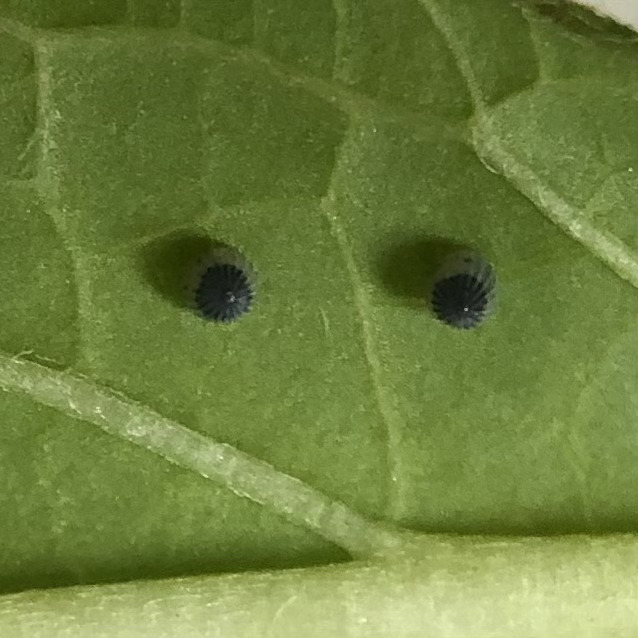
Female Monarchs lay their eggs one at a time on the underside of milkweed leaves. The tiny ribbed eggs — barely the size of a pinhead — are easy to miss, but a trained eye can spot the pearl-like dots nestled against the green. Check milkweed plants regularly throughout the summer and gently mark or collect leaves that hold eggs before birds or parasitic wasps find them first.
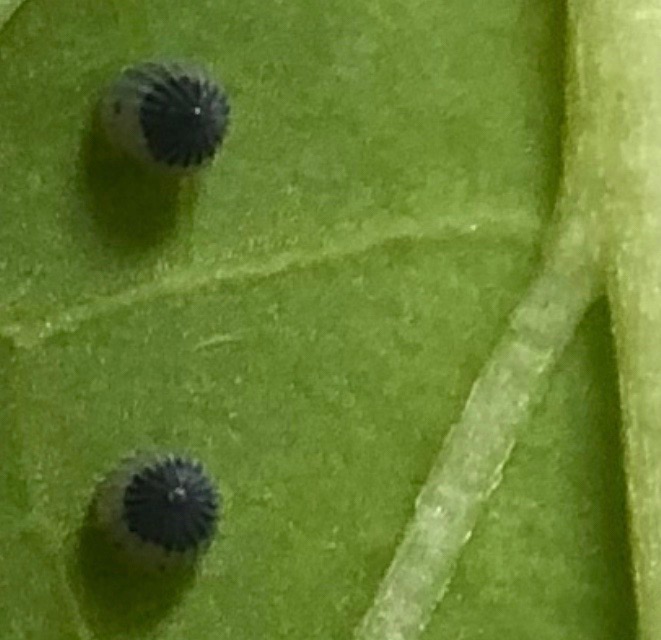
Two Monarch eggs close-up on milkweed leaf
Two eggs side by side — note the fine ridges on each
Two Monarch eggs on a broader milkweed leaf
A slightly wider view shows the scale against leaf veins
💡 Monarch eggs turn from pale yellow to gray-blue in the day or two before hatching — a sign the larva inside is nearly ready.
2

Bringing Eggs Inside to Safety

Once collected, leaves bearing eggs are placed in small vials or cups of water to keep them fresh, then arranged in trays indoors — away from predators, wasps, and weather. Each leaf becomes a tiny nursery. Keeping things clean and well-ventilated helps prevent mold and disease as you wait for the magic to begin.
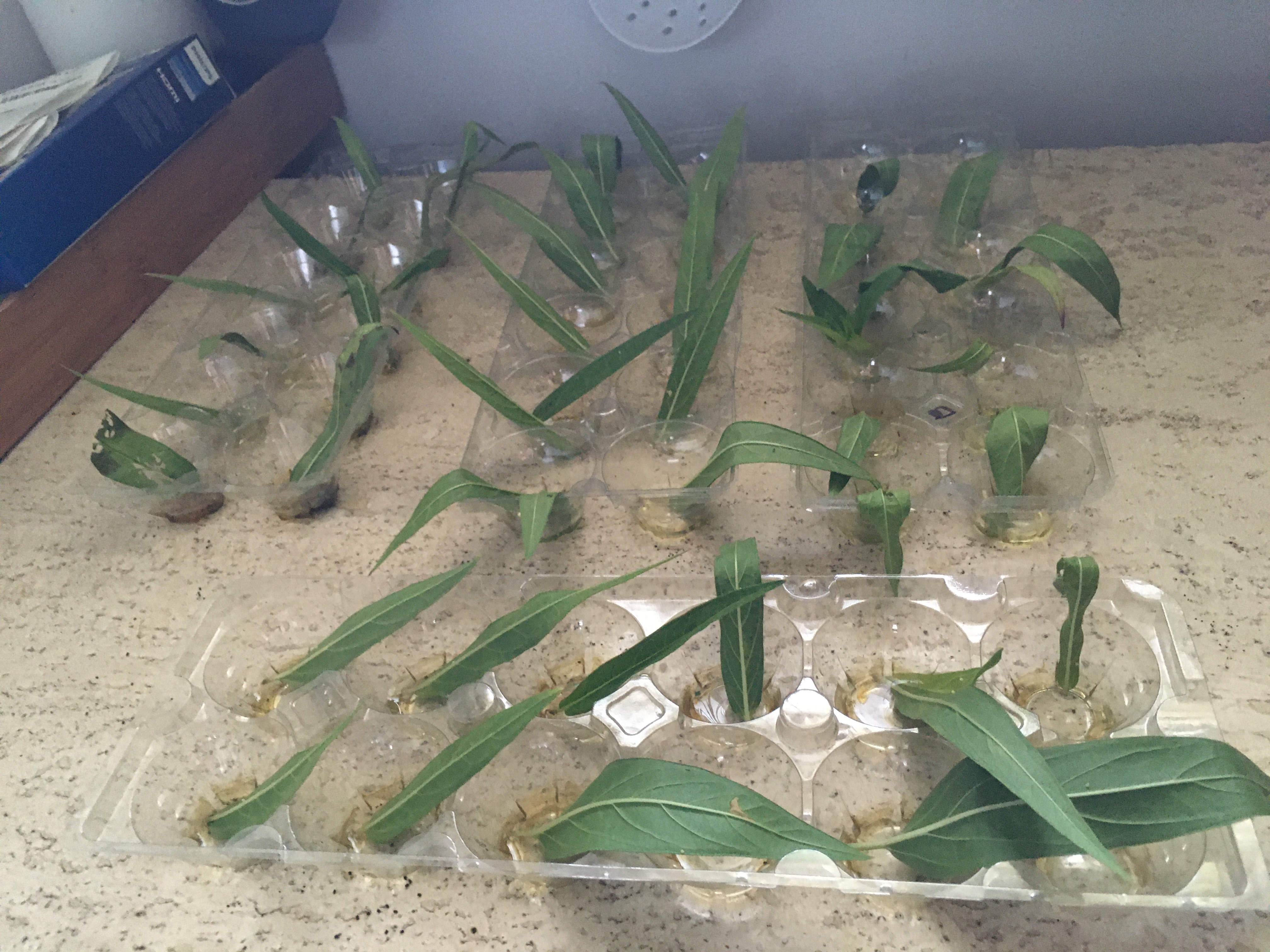
Many milkweed leaves in cups arranged in trays indoors
Dozens of leaves with eggs, each in its own water vial, waiting to hatch
💡 Use clear plastic cups or small floral water tubes so you can check the water level without disturbing the leaves.
3

Eggs Hatch — Meet the Tiny Caterpillars

About three to five days after being laid, the eggs hatch into first-instar caterpillars no bigger than an eyelash. They immediately begin eating — first their own eggshell, then the milkweed leaf. Placed next to a dime, their minuscule size is astonishing. These fragile hatchlings need access to fresh milkweed around the clock.
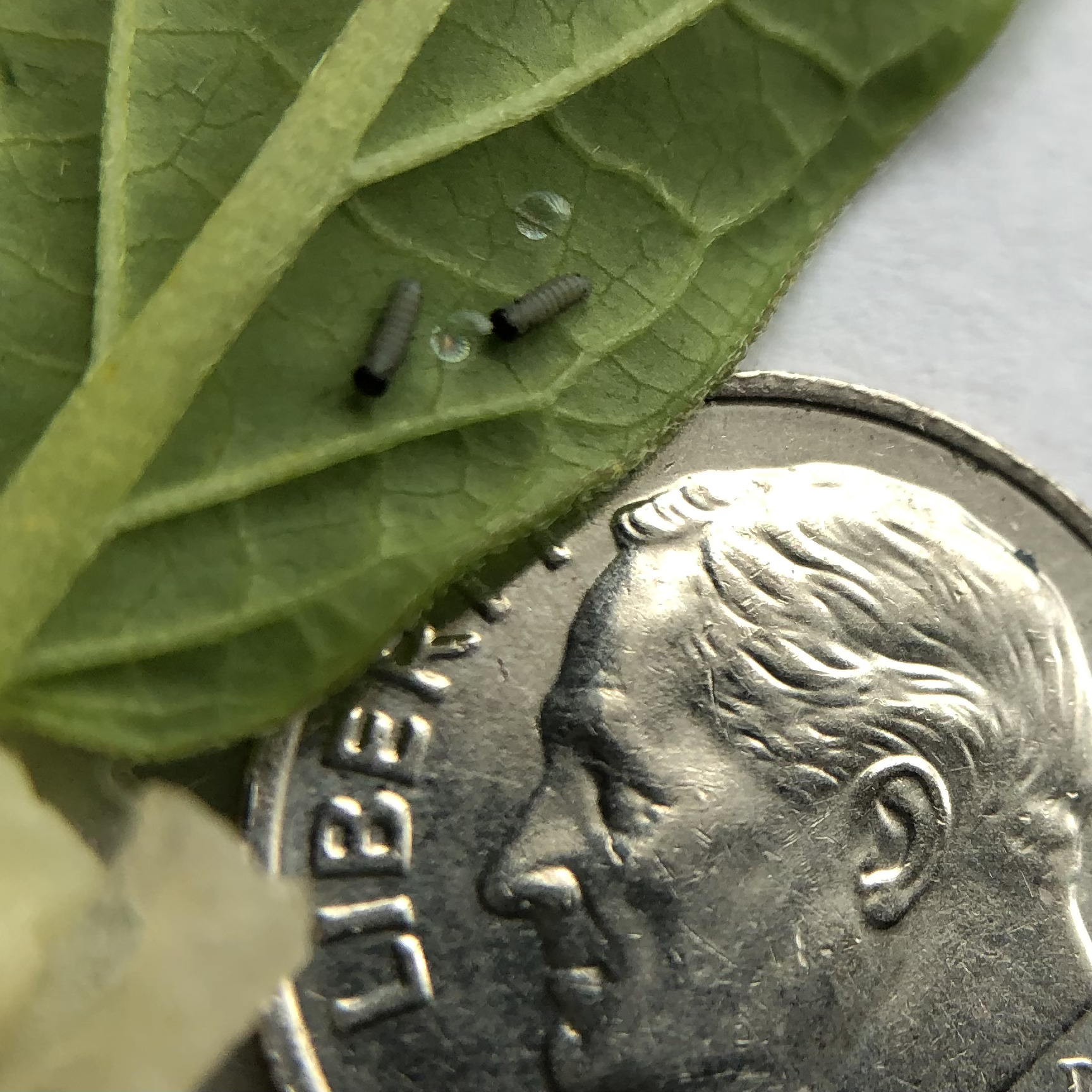
Newly hatched caterpillars on a leaf next to a dime for scale
Freshly hatched caterpillars — barely visible against the leaf — shown next to a dime for scale
💡 At this stage, caterpillars are so small they can drown in a droplet of water. Keep their enclosure dry and use a fine mist only around the leaves, never directly on the larvae.
4

Feeding the Caterpillars — They're Hungry!

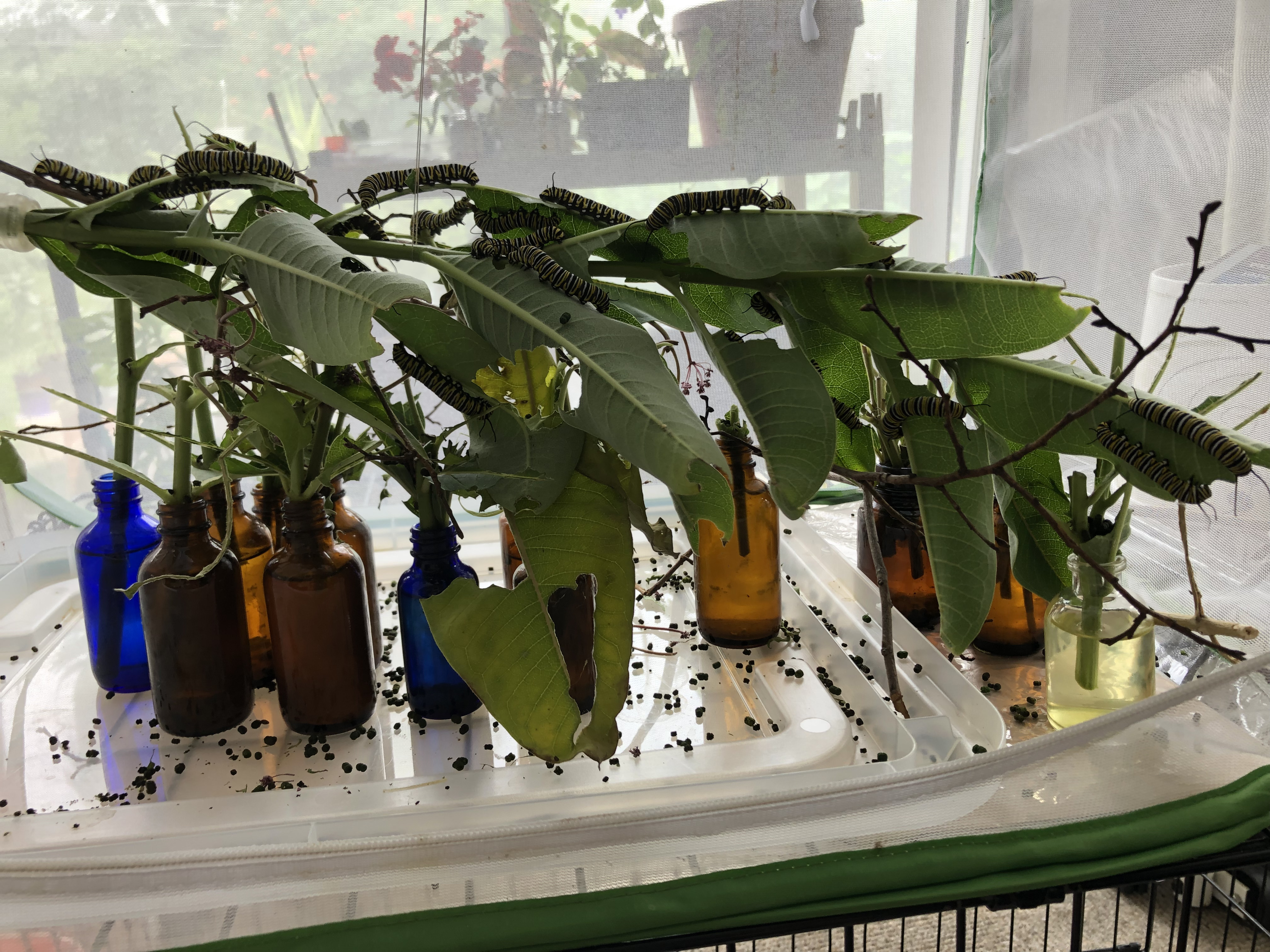
Monarch caterpillars eat only milkweed — and they eat a lot of it. As they grow through five instars (molting stages) over ten to fourteen days, their bold yellow, black, and white stripes become vivid. Fresh milkweed stems are kept in water bottles to stay crisp. Watch for the frass (droppings) piling up — it means everyone is eating well.
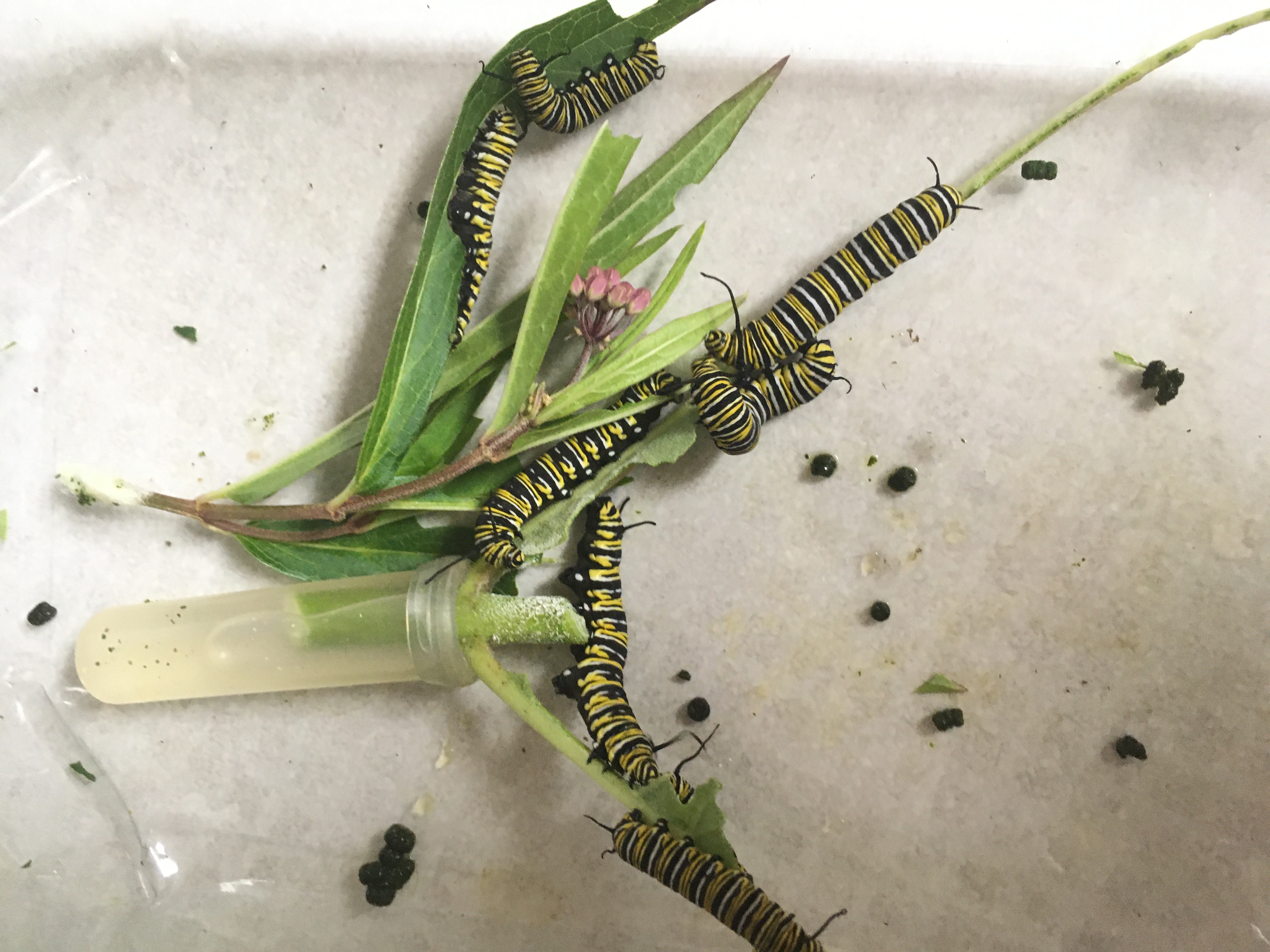
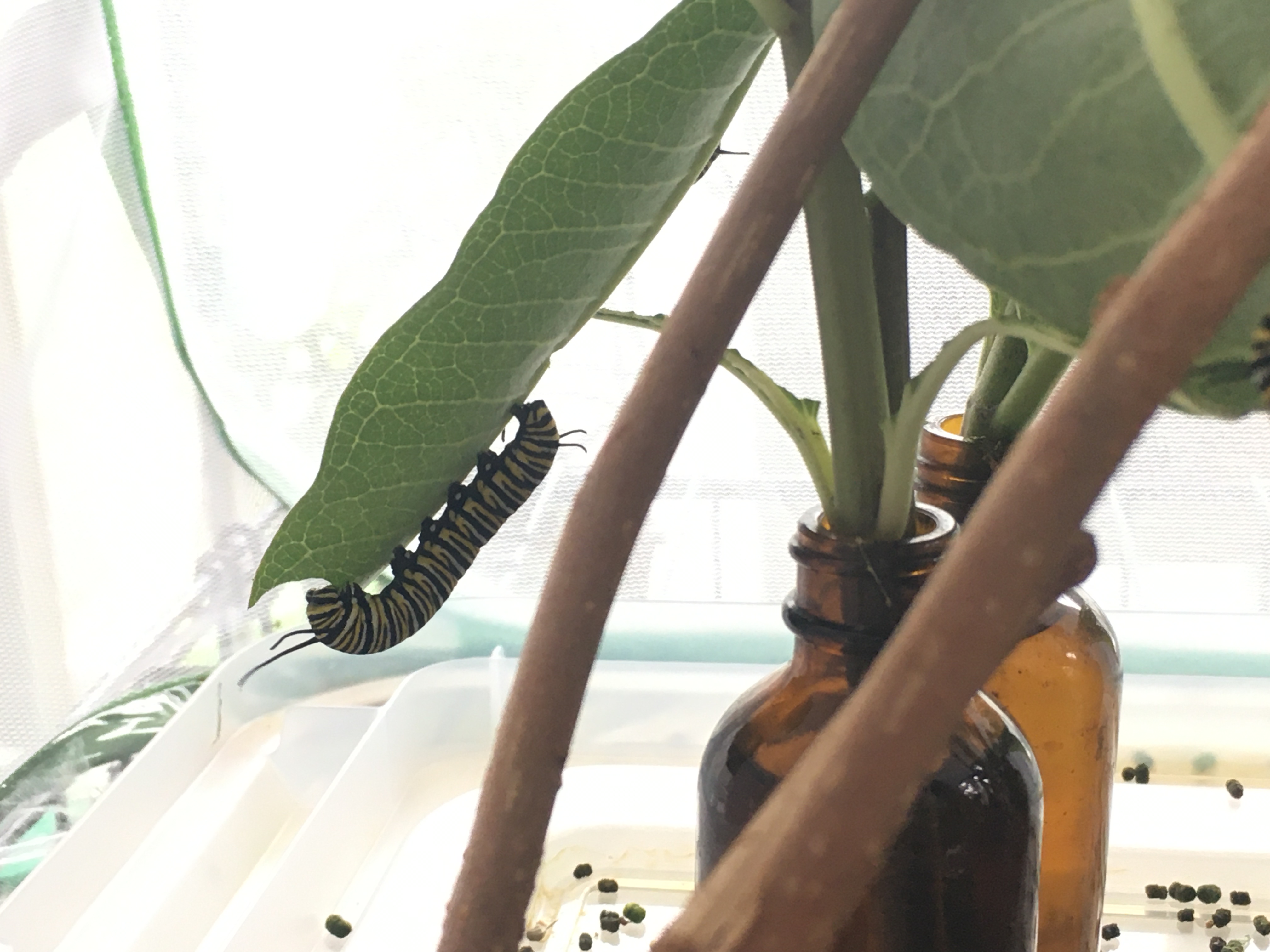
Many caterpillars feeding on milkweed sprigs in a tray
A crowd of hungry caterpillars working through a milkweed bunch
A large caterpillar munching a milkweed leaf in an enclosure
A late-instar caterpillar getting plump on fresh milkweed
Many caterpillars on milkweed in bottles inside a mesh tent
The whole crew feasting — frass everywhere means a healthy appetite
💡 Refresh milkweed daily. Wilted leaves contain less of the cardiac glycosides that make Monarchs toxic to predators — and the caterpillars simply won't eat them.
5

Forming the Chrysalis

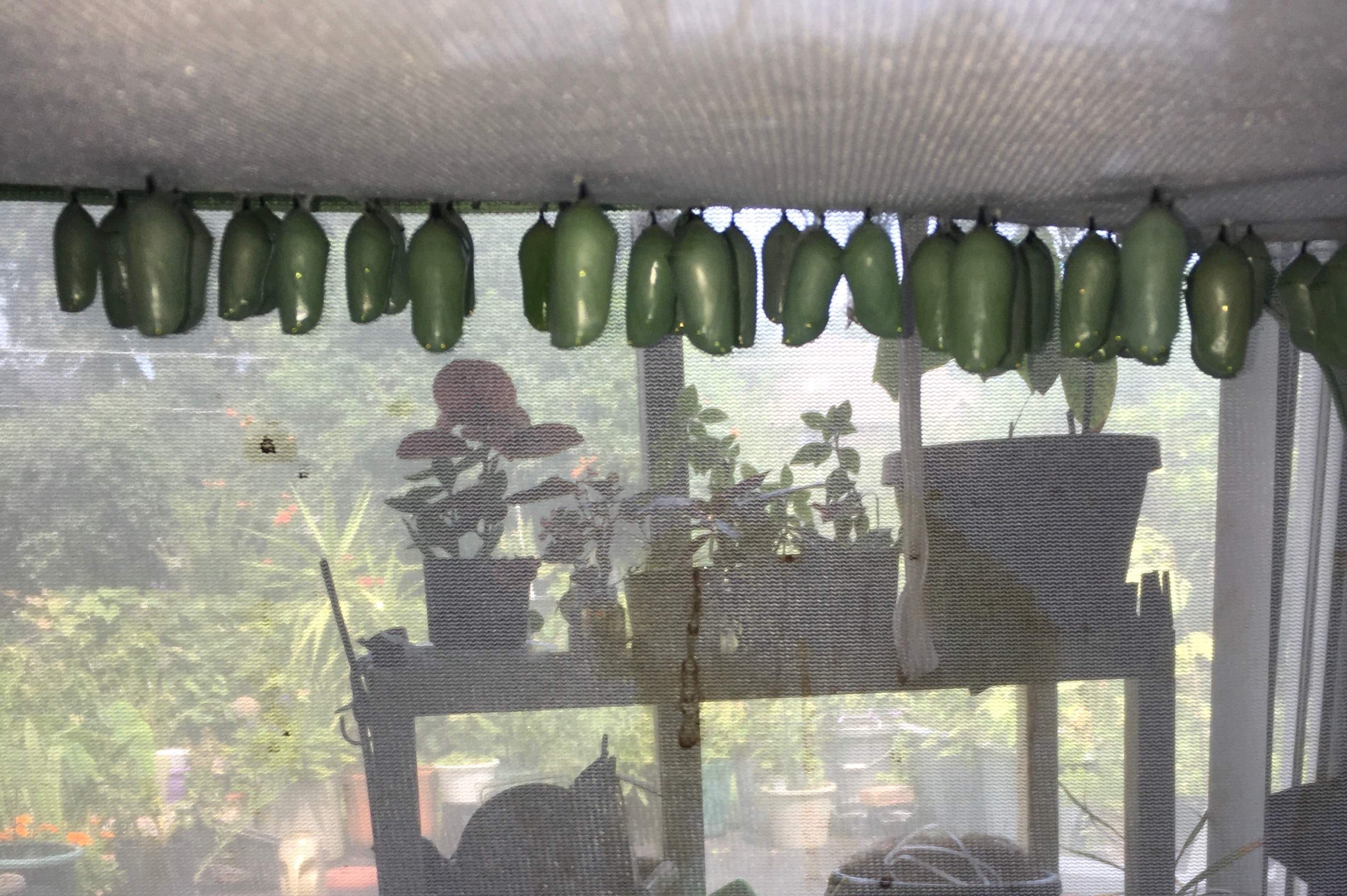
When a caterpillar is ready to pupate, it stops eating, wanders restlessly, then anchors itself to a surface with silk and hangs in a characteristic "J" shape. Over the next twelve to sixteen hours it sheds its final skin to reveal a brilliant jade-green chrysalis decorated with a golden crown. A row of chrysalises hanging from the top of an enclosure is one of nature's most remarkable sights.
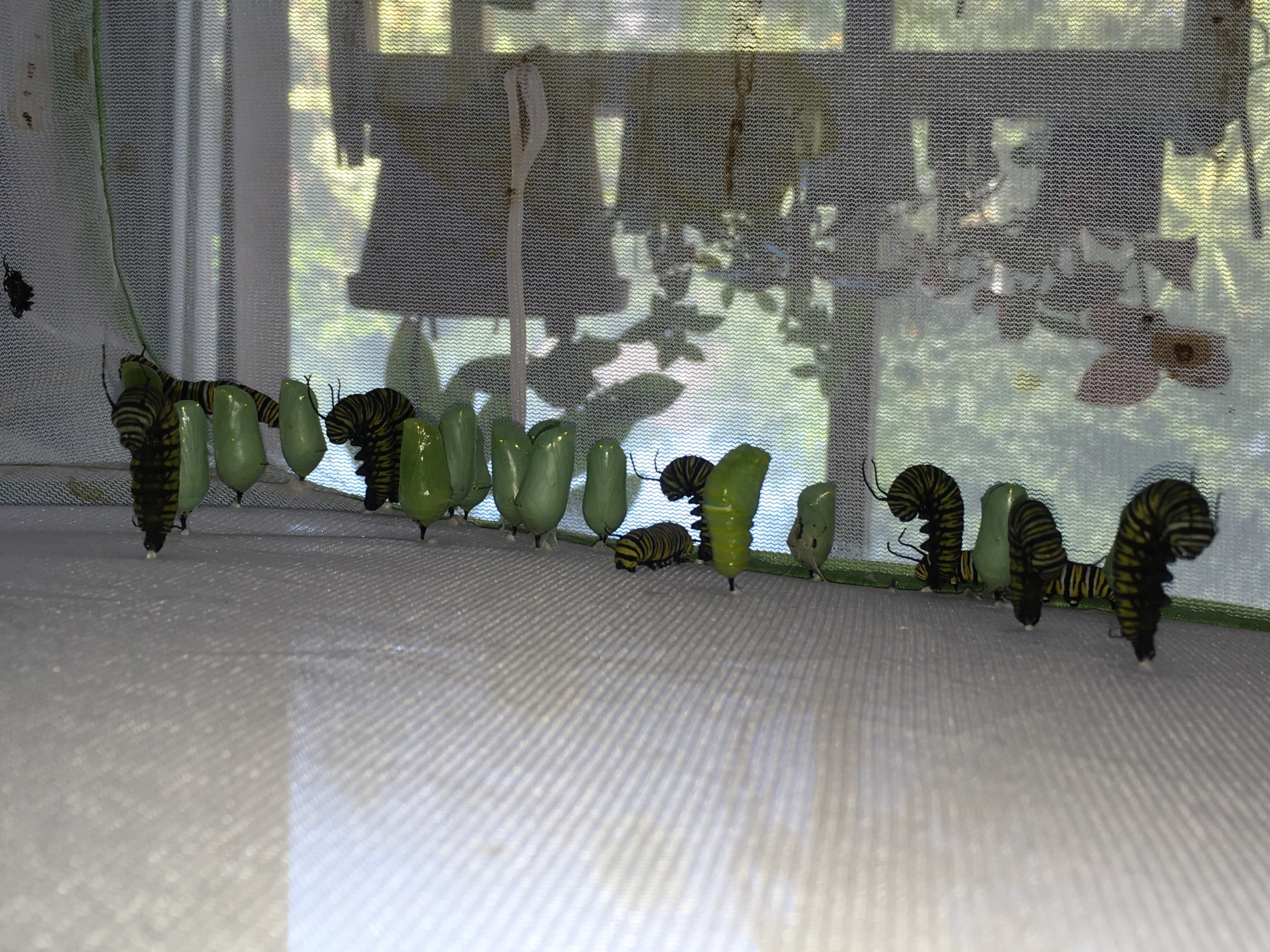
Caterpillars in J formation and early chrysalis formation along mesh
Caterpillars hanging in the J-formation — and freshly formed chrysalises alongside
Two dozen green chrysalises hanging from the ceiling of a mesh enclosure
A full row of jade-green chrysalises — each one a butterfly in waiting
💡 Once in the J-hang, don't move or jostle the enclosure — any disturbance can cause a deformed butterfly.
6

The Chrysalis Darkens — Emergence Is Near

For about ten days the chrysalis stays a vivid green. Then, in the final twenty-four hours, it turns dark and translucent — the compressed orange and black wings of the butterfly become visible through the thinning shell. This is the most exciting waiting game in nature.
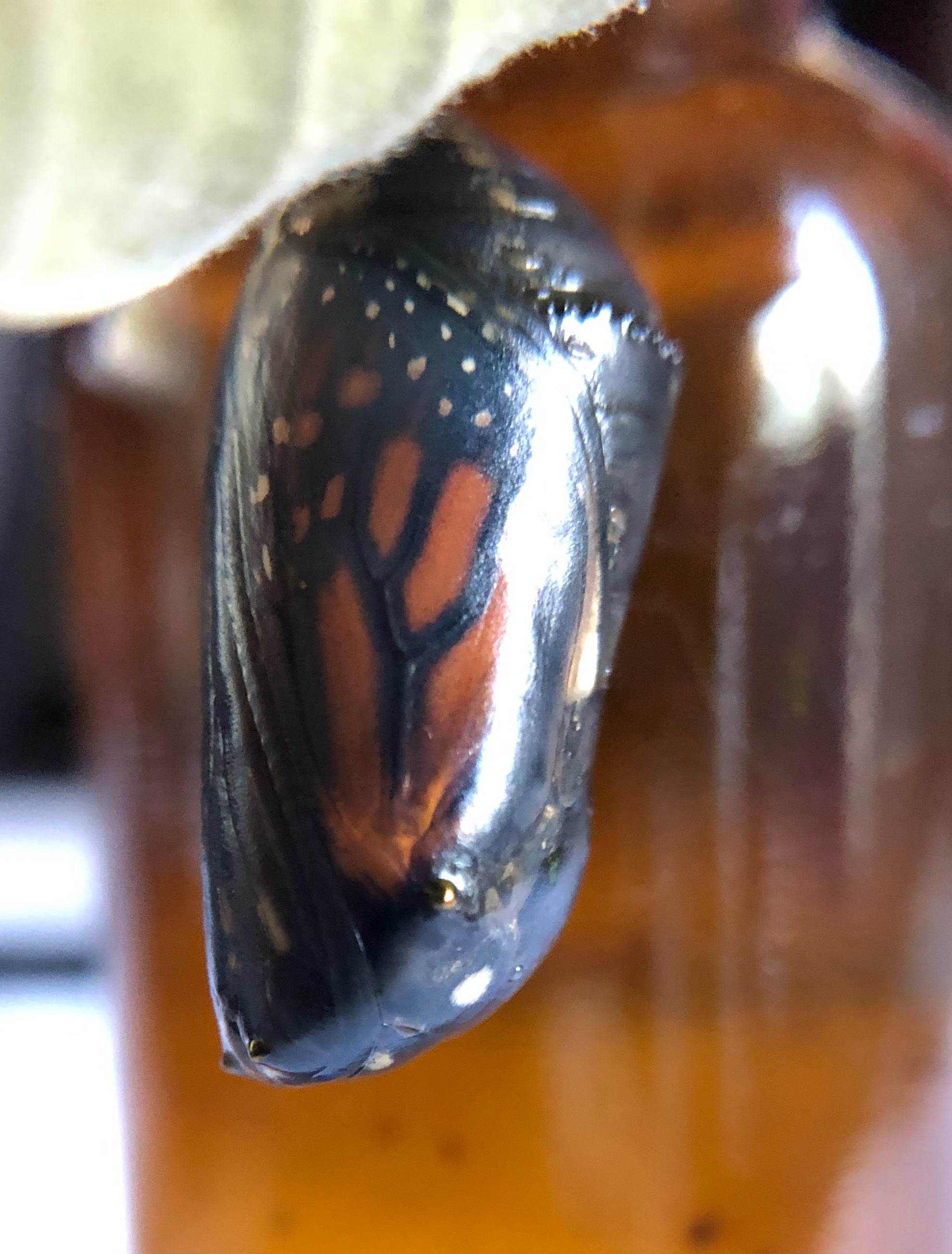
Dark, translucent chrysalis with butterfly wings clearly visible inside
The chrysalis has turned dark and glassy — you can see the wings folded inside, just hours from emerging
💡 Check frequently once the chrysalis darkens — emergence happens quickly, often in the morning, and it can be over in under a minute.
7

Butterflies Emerge!

The chrysalis splits open and a damp, crumpled butterfly pulls itself free, gripping the empty shell while pumping fluid from its abdomen into its wings. Over the next hour or two the wings expand, stiffen, and dry. Watching several emerge on the same morning — stretching their new wings in the enclosure — is pure joy. This season's count included Monarch #420 in 2025!
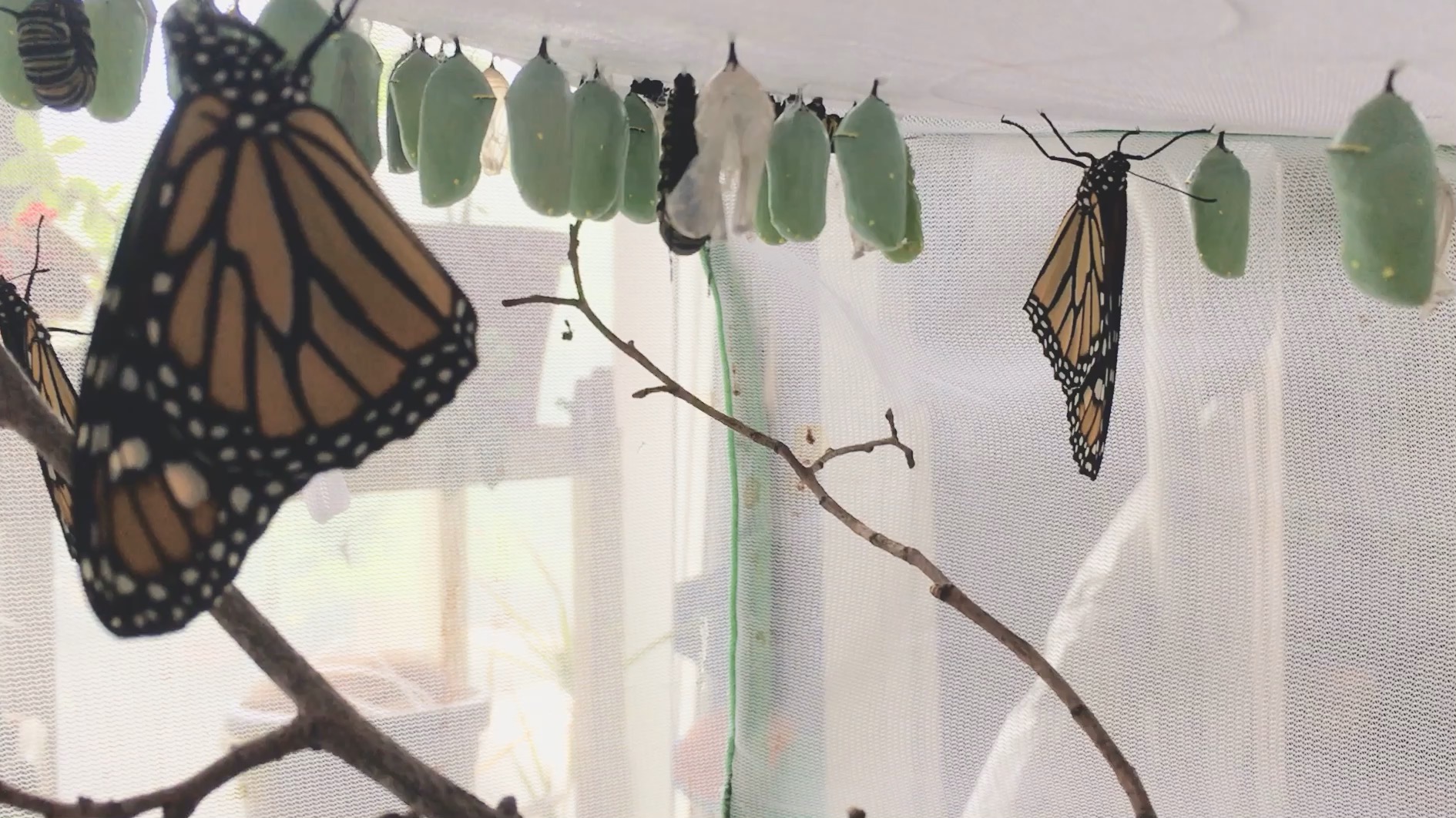
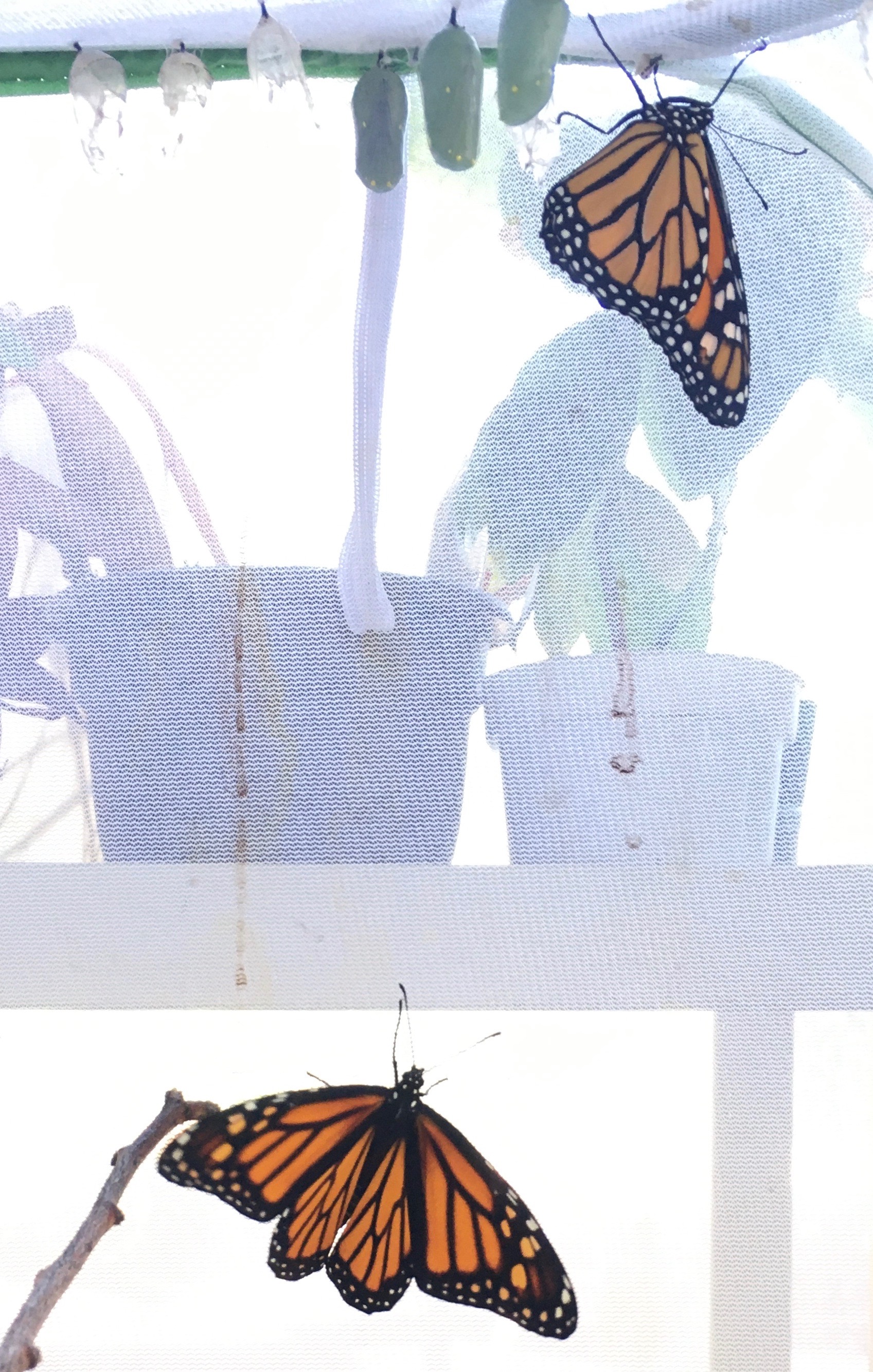
Several Monarchs hanging from chrysalises, wings newly expanded, inside mesh enclosure
A busy emergence morning — butterflies hanging everywhere, wings still drying
Two Monarchs hanging in a mesh enclosure expanding their wings
Two freshly emerged Monarchs taking their time before the big flight
Monarch butterfly #420 of 2025 perched on hydrangea blooms
Monarch #420 of 2025 — a milestone worth celebrating!
💡 Leave newly emerged butterflies undisturbed for at least two to four hours. Wings that are moved before they fully harden may become permanently crumpled.
8

Ready to Fly — Monarchs & Swallowtails

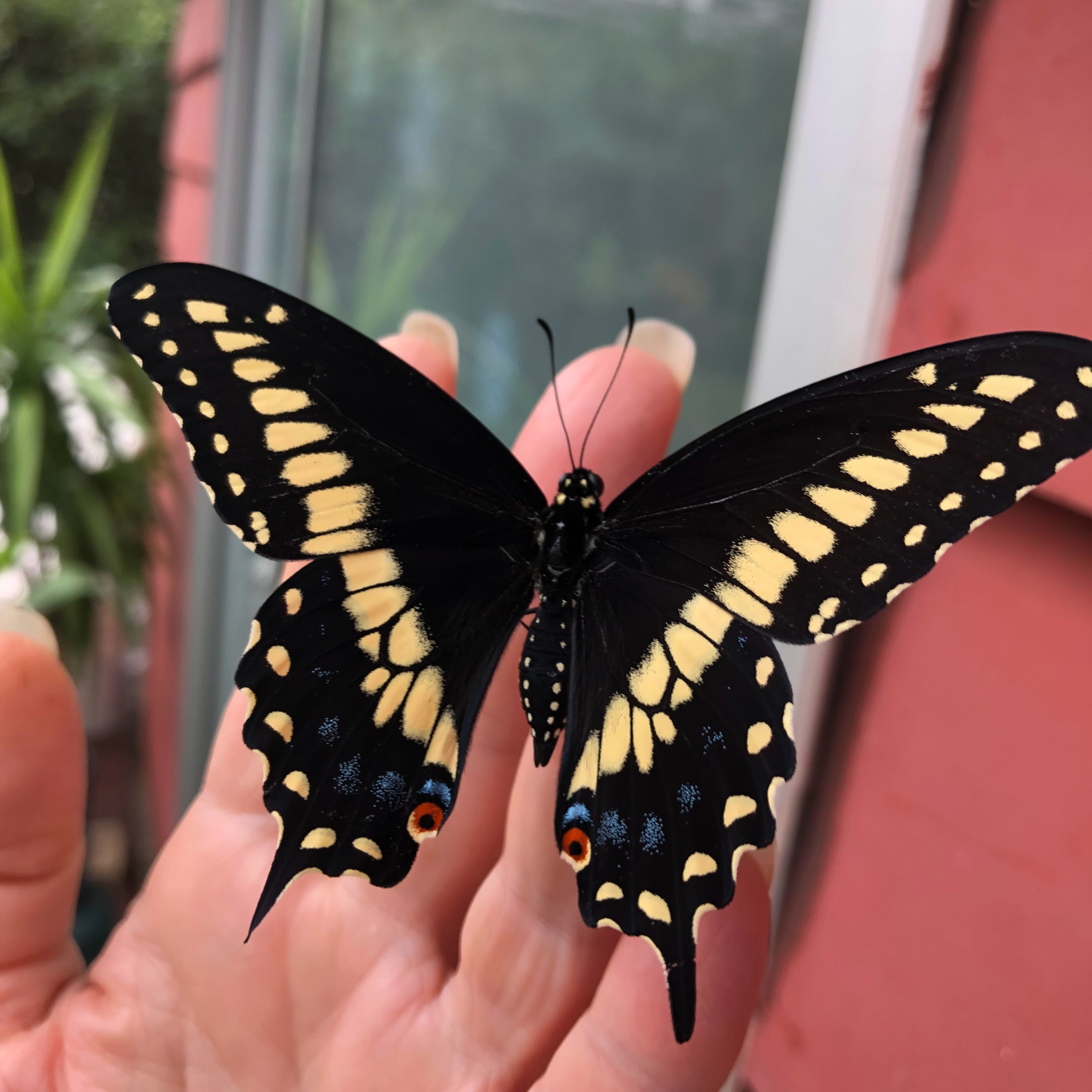
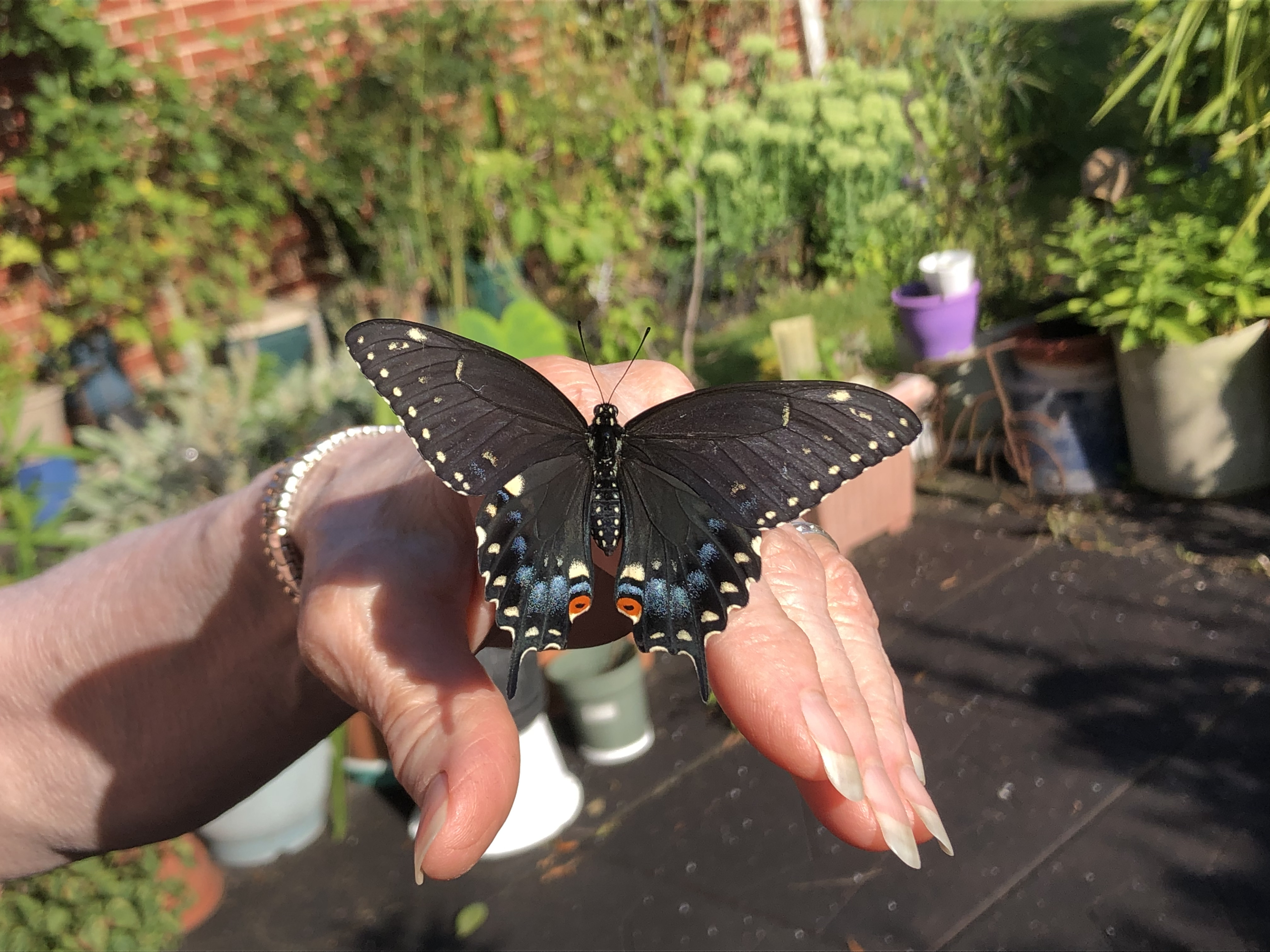
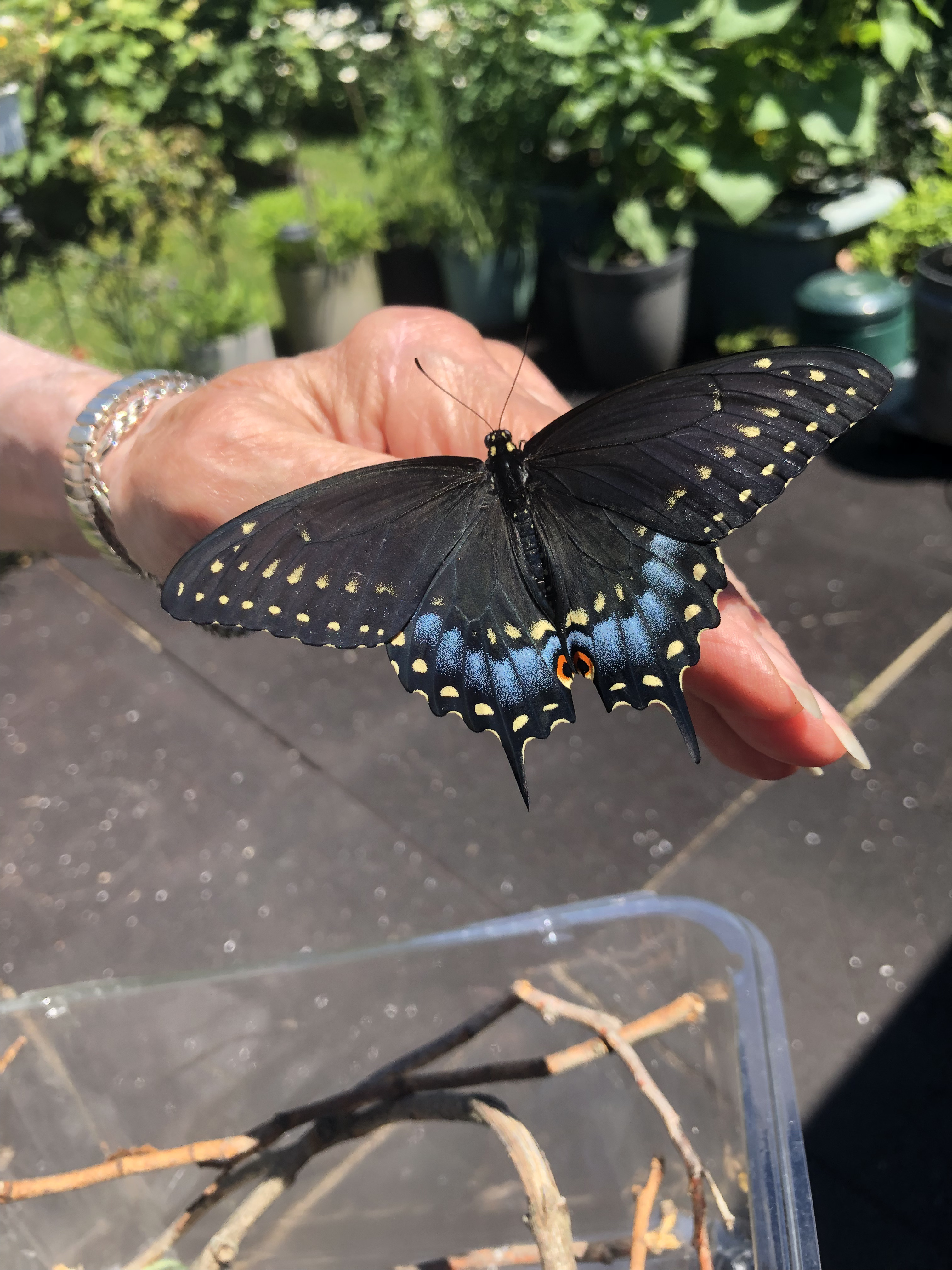
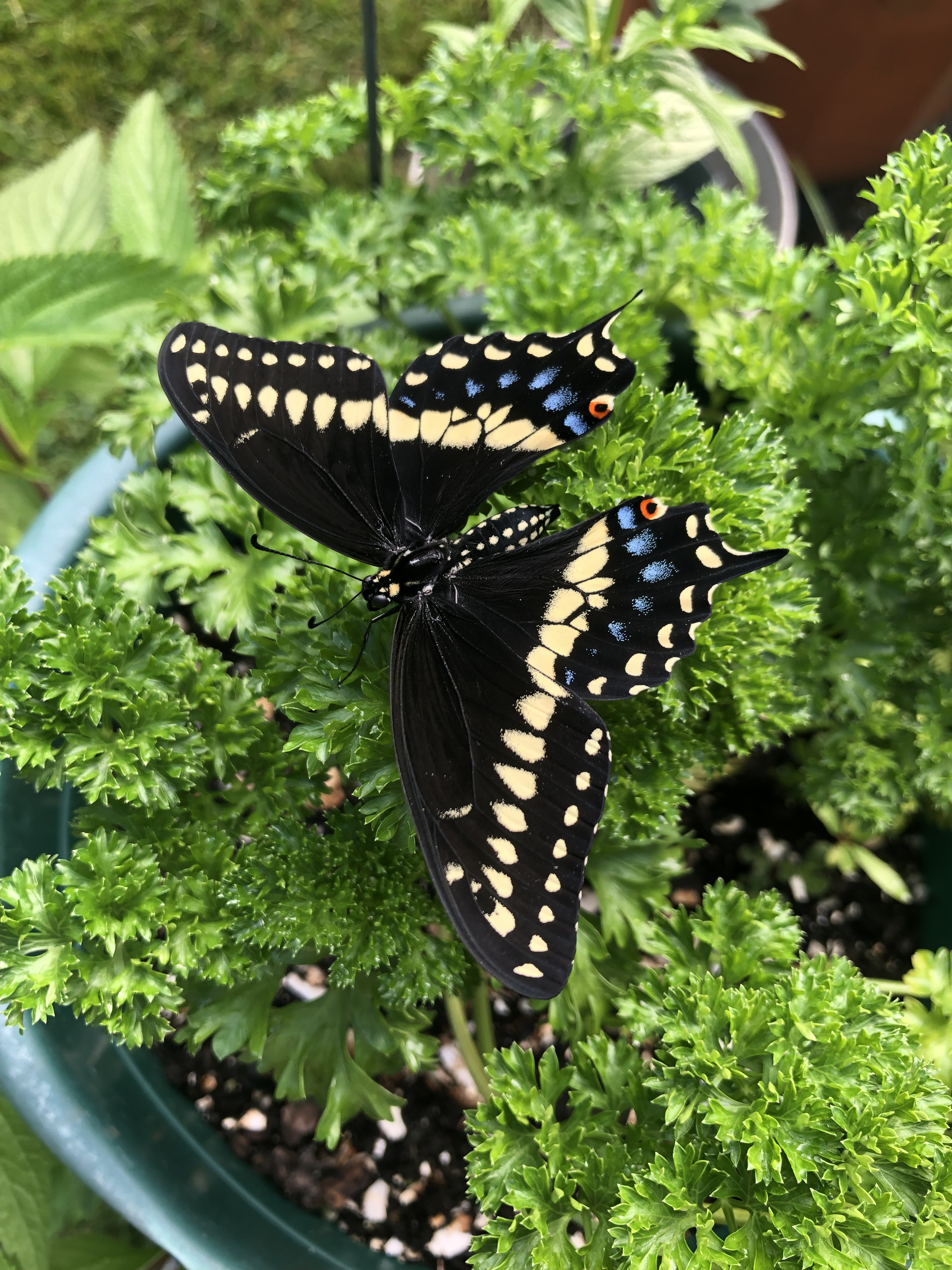
Once their wings are fully dry and strong, the butterflies are ready to meet the world. Monarchs perch calmly on a finger or a flower, fanning slowly. The striking Swallowtails — black with cream-yellow spots and iridescent blue and orange accents — are equally breathtaking up close. Both species reward all those weeks of caregiving with extraordinary beauty.
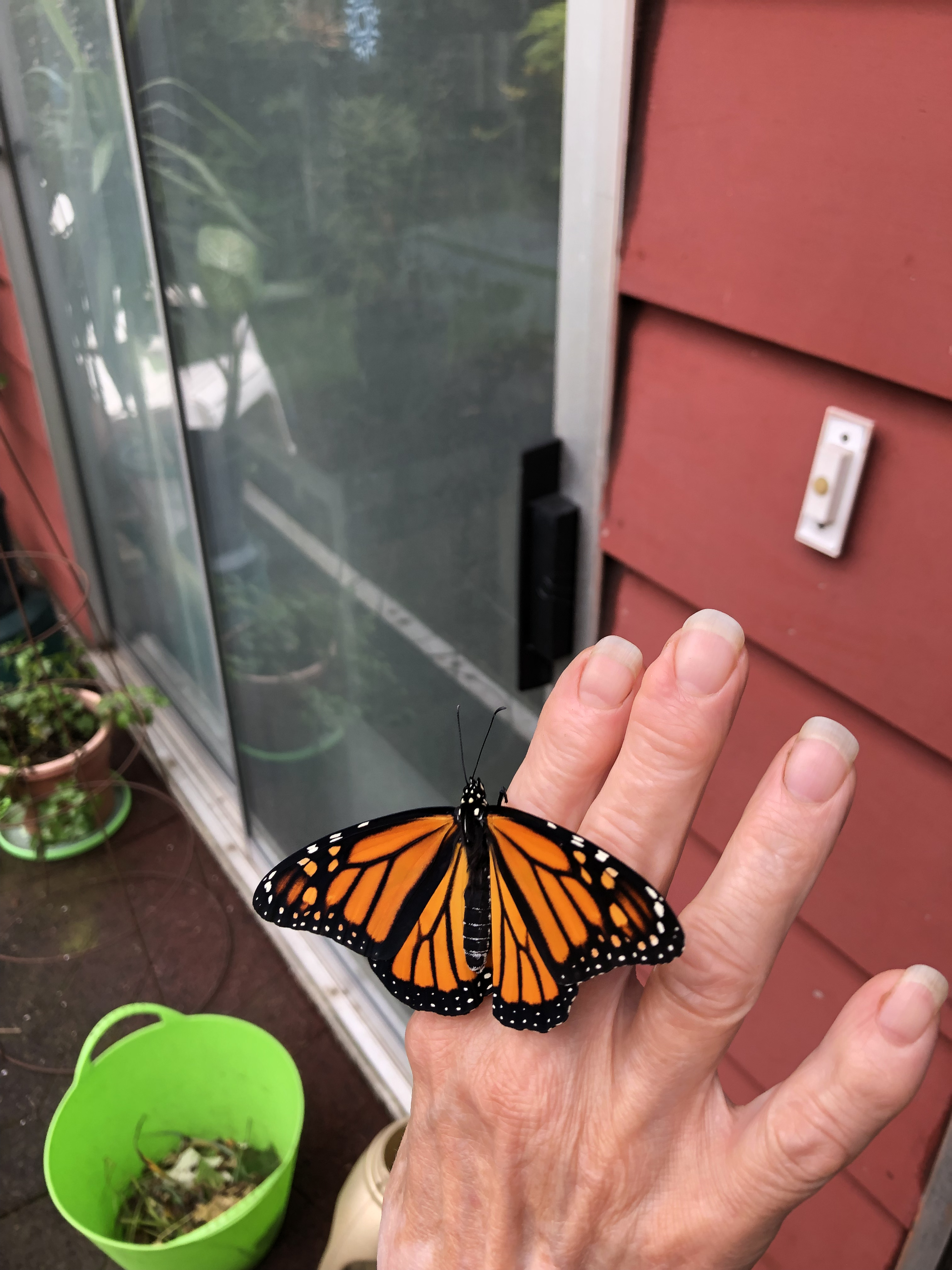
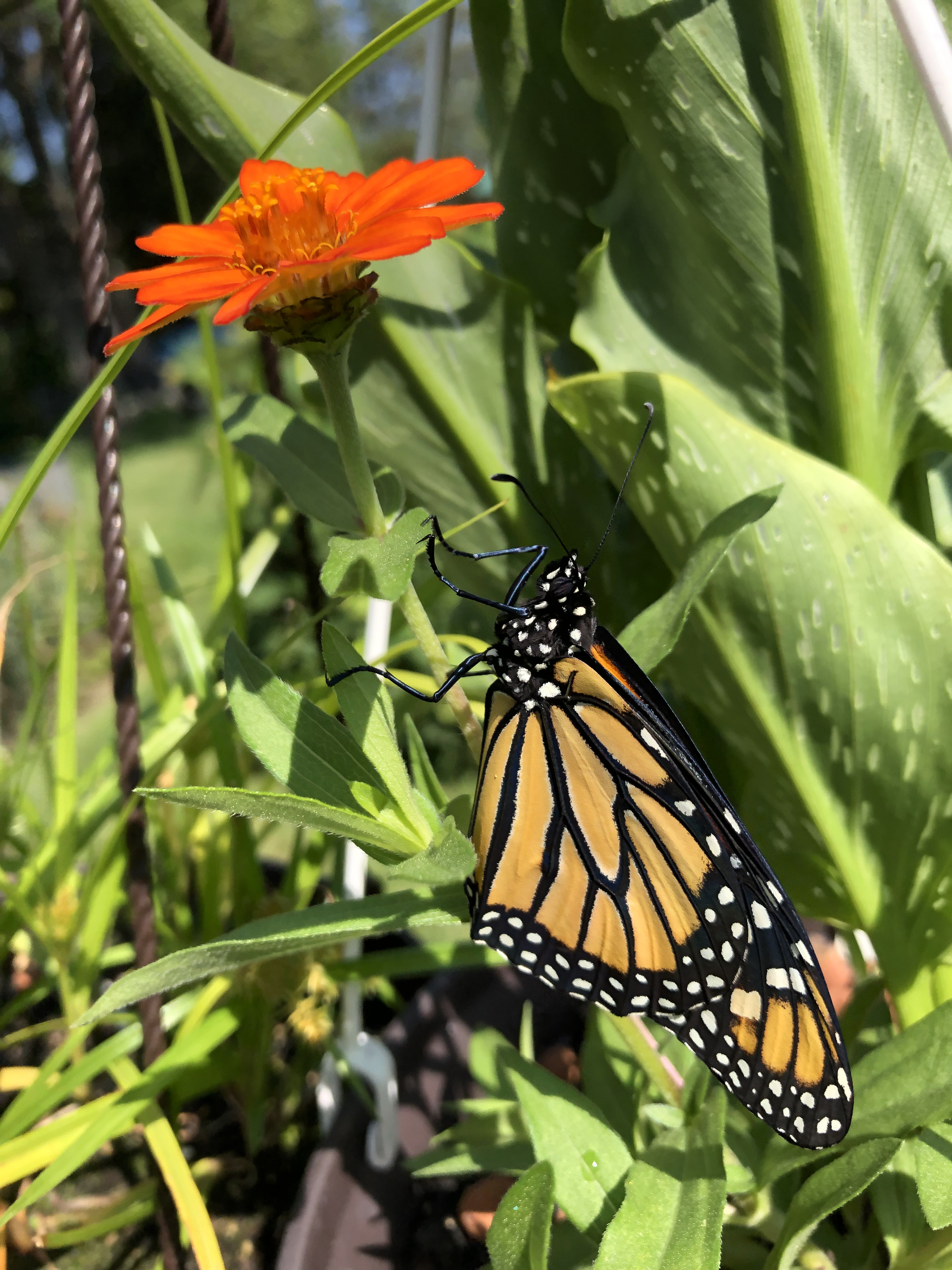
A Monarch butterfly perched on a hand, wings spread wide
A Monarch rests on a hand, wings fully open and ready
A Monarch butterfly on an orange zinnia flower in the garden
Pausing on a garden zinnia — testing the world before taking flight
A yellow and black Swallowtail butterfly held on fingers
An Eastern Swallowtail — brilliant yellow and black markings
A Black Swallowtail with blue iridescence resting on open hands
A Black Swallowtail showing off its stunning blue and orange eyespots
A large Black Swallowtail with full wings spread on a hand
Full wingspan on display — a gorgeous Black Swallowtail
💡 Try to release on a warm, sunny, calm day — butterflies are cold-blooded and need ambient warmth to fly strongly.
9

Release — Fly Free!

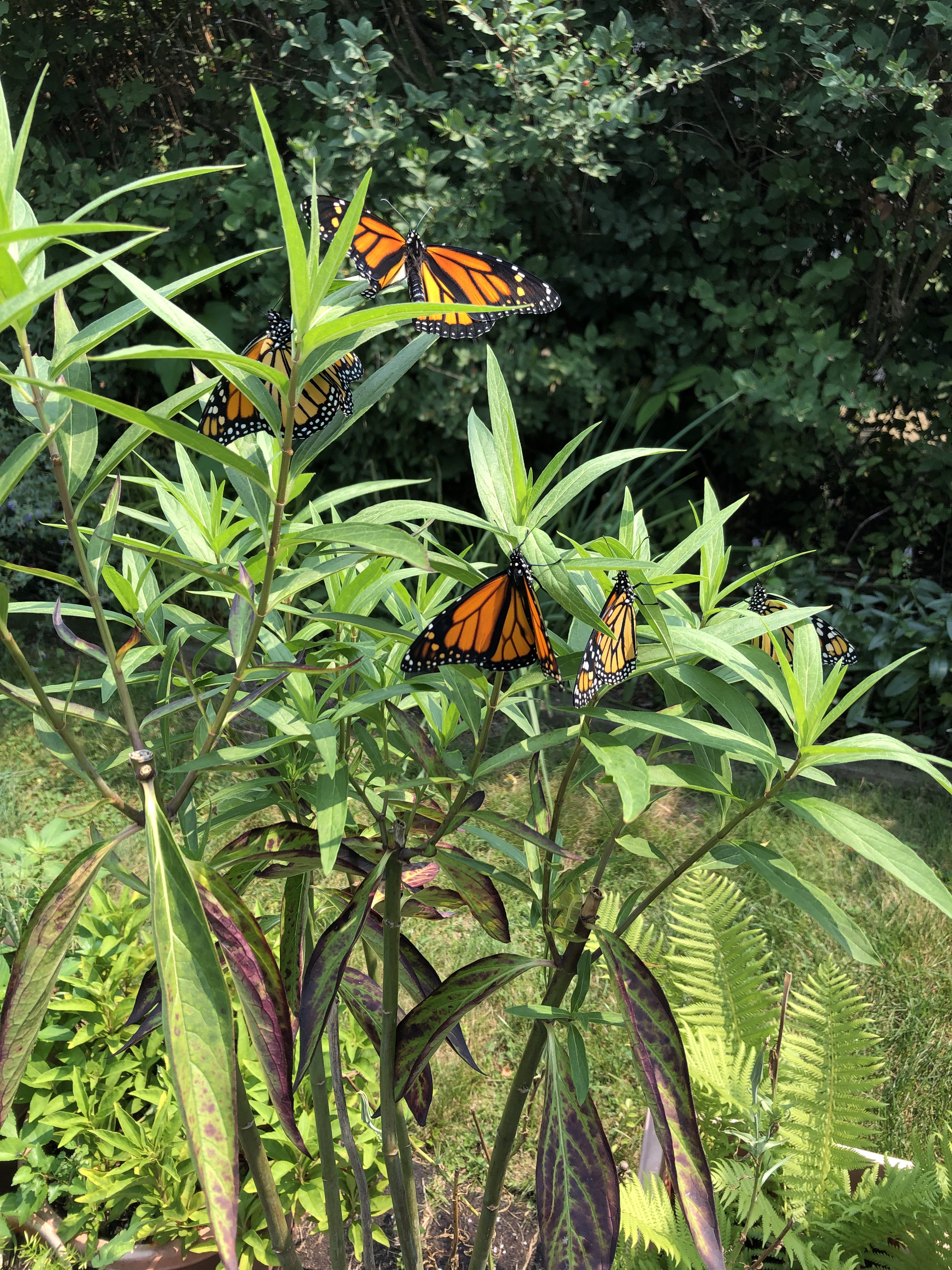
The final and most rewarding moment: stepping outside, opening your hands, and watching a butterfly you've raised from an egg lift off into the sky. Monarchs may linger on milkweed in the garden before departing. Some days you release one; other days you release two at once from both hands. A pair of Swallowtails released together on a parsley plant pause to sun themselves before disappearing into the blue.
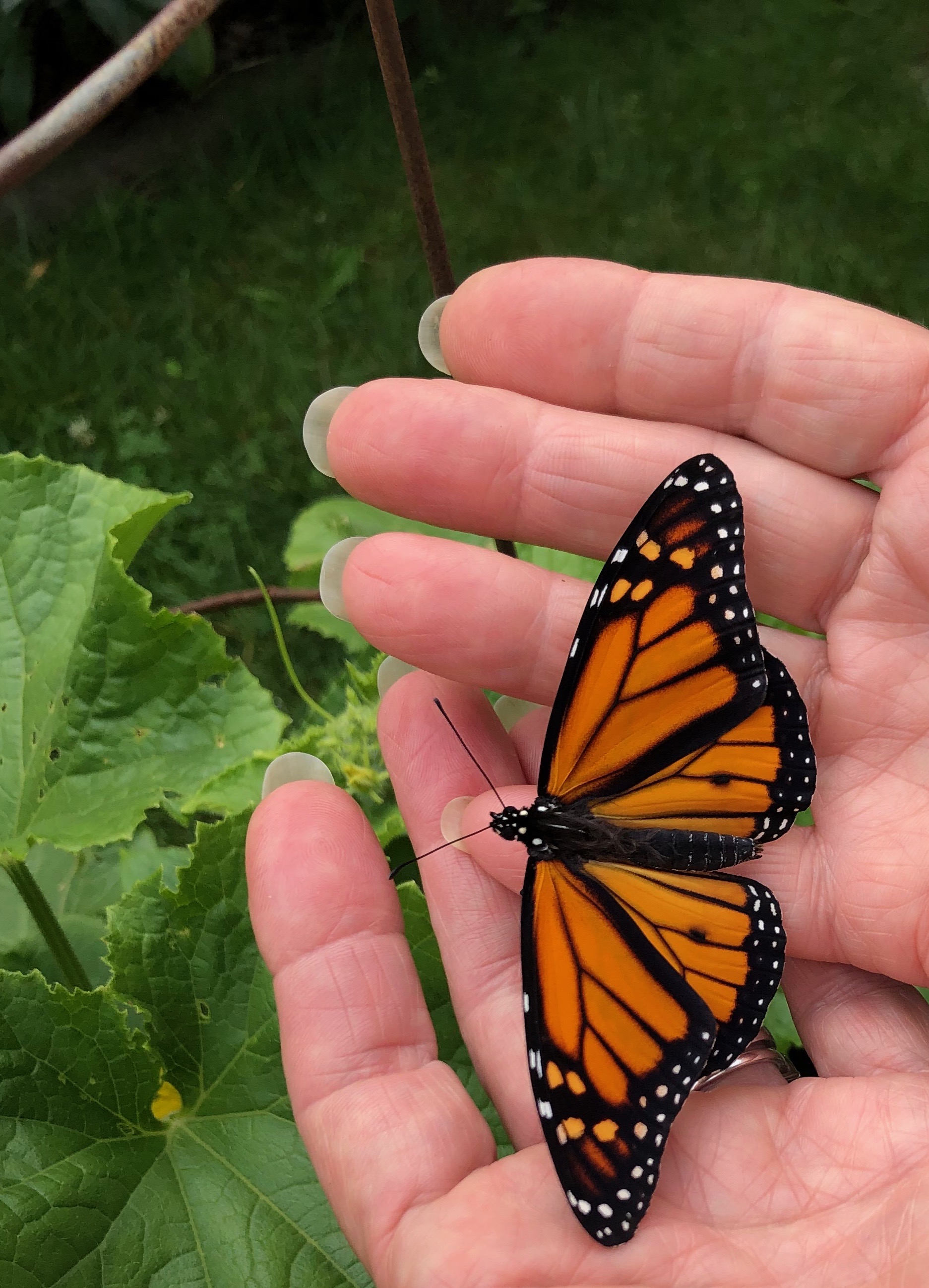
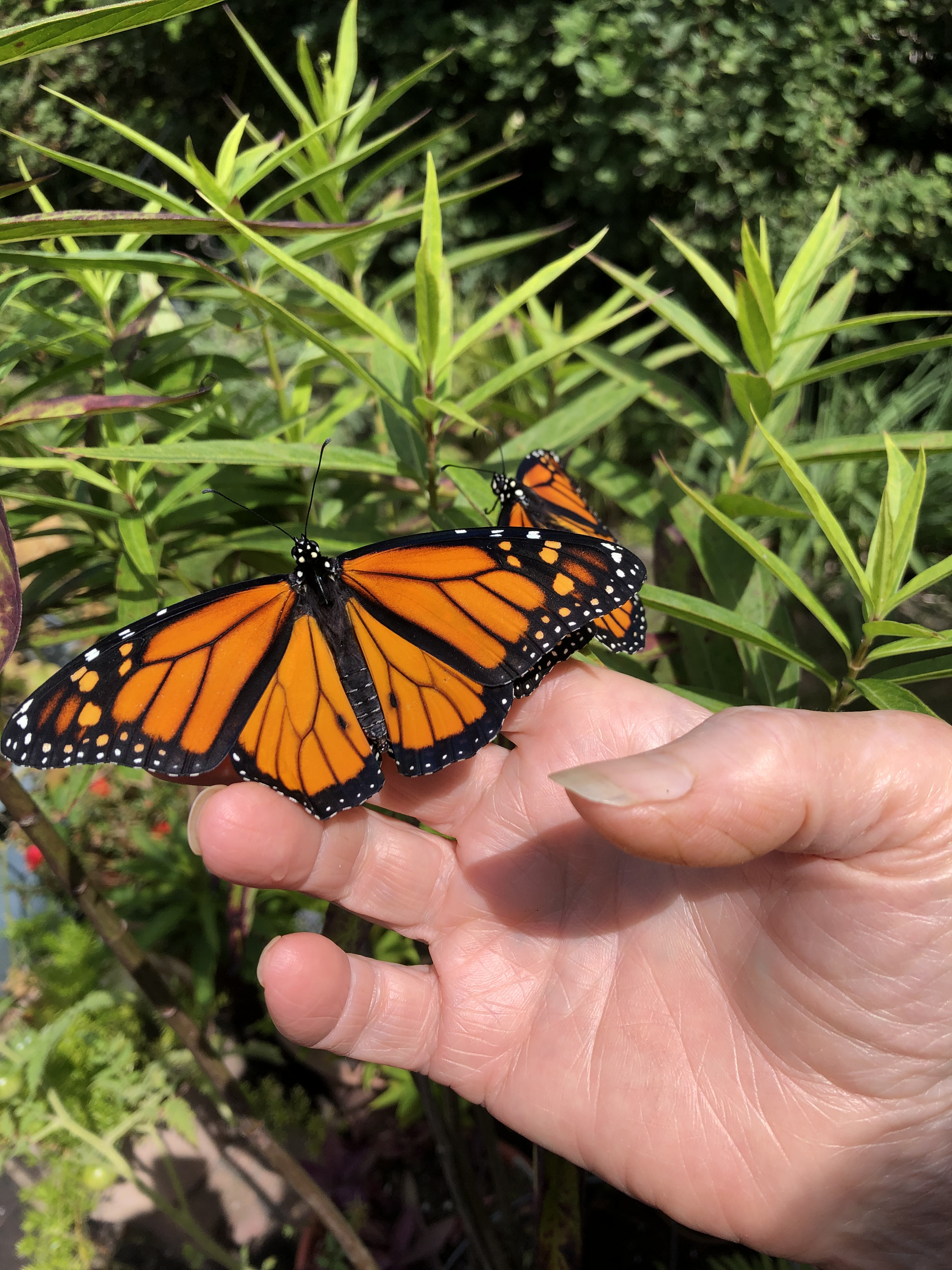
A Monarch resting in cupped hands just before release
One last moment of connection before letting go
Two Monarchs being held in one open hand before release
Releasing two at once — a double gift to the world
Five Monarch butterflies perched on milkweed in the garden
Five Monarchs pausing on garden milkweed before departing south
Two Black Swallowtails released together on a parsley plant
Two Swallowtails sunning on parsley — free at last
🌎 Every Monarch you raise and release helps sustain the eastern population — one of nature's most awe-inspiring migrations, traveling up to 3,000 miles to Mexican overwintering forests.
WordPress Appliance - Powered by TurnKey Linux